


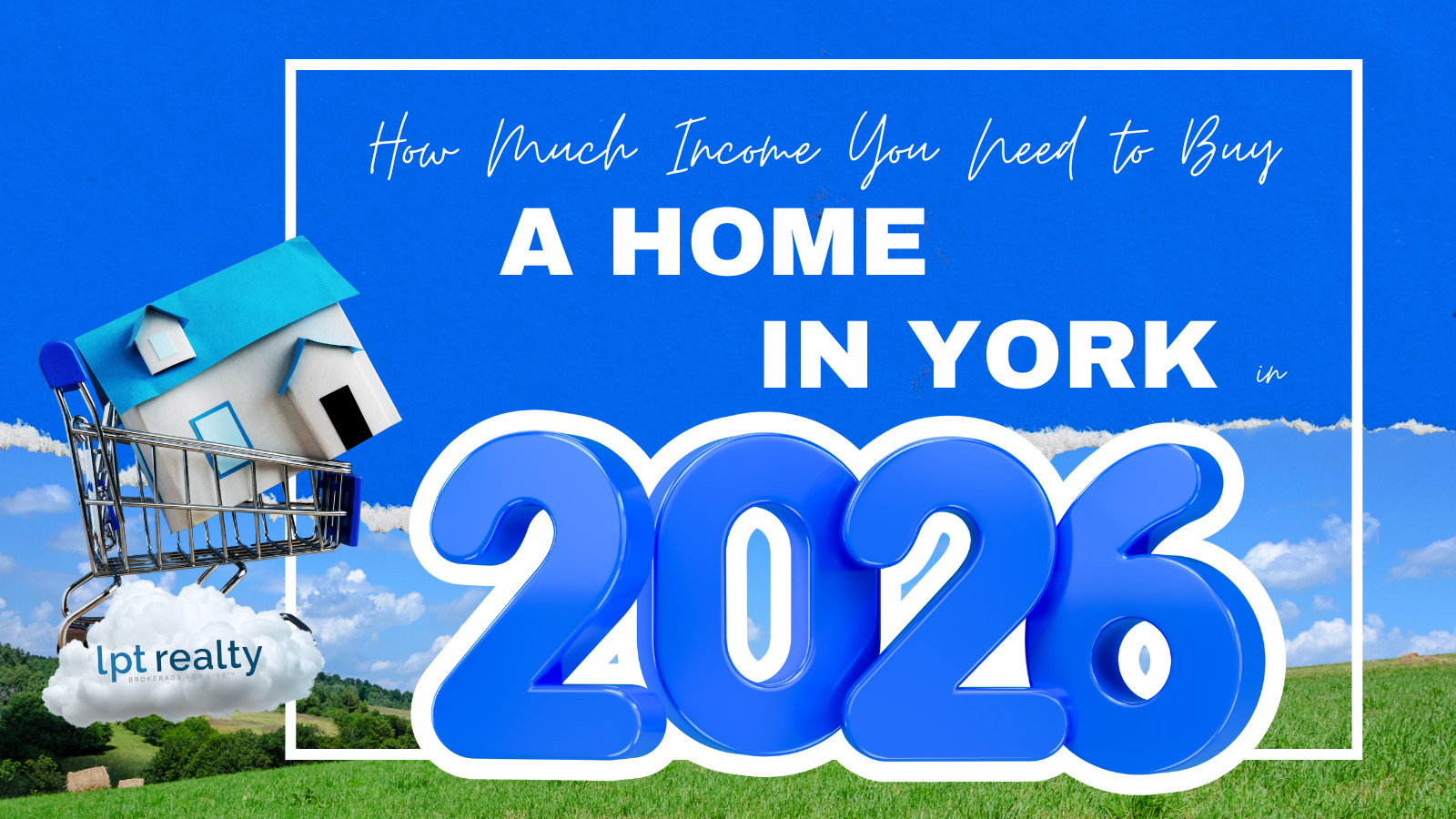
As more buyers begin planning ahead for 2026, one question continues to dominate conversations in York’s real estate market: How much income do you really need to buy a home?
With interest rates adjusting, home prices stabilizing, and lending guidelines becoming more nuanced, the answer isn’t as simple as plugging numbers into an online calculator. Income matters but so do credit, debt, loan programs and local market conditions. Buyers who understand how these factors work together often find that homeownership is far more attainable than they initially expected.
That’s where local expertise makes a difference. Buyers working with professionals like Renee Lloyd - widely recognized as the Best Realtor in York - gain clarity on what lenders actually look for and how to position themselves for success.
This blog breaks down income requirements for buying a home in York in 2026 using a clear Q&A format, addressing real questions buyers ask every day. Whether you’re a first-time buyer, a growing household, or planning a relocation, this guide provides a realistic, York-specific roadmap to help you plan with confidence.
Q: Why Is Income Such an Important Factor When Buying a Home?
Income is the foundation lenders use to determine affordability, but it’s not viewed in isolation. Instead, lenders assess income alongside debt, credit history, and current interest rates to determine whether a buyer can comfortably handle a monthly mortgage payment.
In York, many buyers assume they must earn a six-figure salary to purchase a home. In reality, income requirements vary widely depending on the home price, loan program, and existing financial obligations. According to Renee Lloyd, York Real Estate Agent, buyers who understand these variables early are often better positioned to act quickly when the right home becomes available.
Q: What Are Home Prices in York Expected to Look Like in 2026?
York continues to stand out as one of the more affordable housing markets in south-central Pennsylvania. Heading into 2026, average home prices across York County are projected to fall between $265,000 and $310,000, depending on neighborhood, home condition, and proximity to schools, employment hubs, and amenities.
Homes within York City often remain more affordable, while surrounding areas such as Spring Grove, Dallastown and Red Lion typically command higher prices. Understanding these micro-markets is one of the reasons buyers rely on Renee Lloyd, Your York Local Realtor, rather than broad national data.
Q: How Much Income Do You Need to Buy an Average Home in York?
A common guideline used by lenders is that housing costs should not exceed 28–30% of gross monthly income. Using this benchmark, here’s a realistic 2026 scenario:
- Home price: $275,000
- Down payment: 5%
- Estimated interest rate: 6.25%
- Monthly payment (mortgage, taxes, insurance): ~$1,850
To support this payment comfortably, a buyer or household would typically need an annual income of approximately $75,000-$80,000.
However, this is not a fixed rule. Buyers using FHA, VA, or first-time buyer programs may qualify with lower income thresholds, especially if they carry minimal consumer debt. This is where guidance from the Best Realtor in York, Renee Lloyd, becomes especially valuable.
Q: Can You Buy a Home in York With Less Than $70,000 in Income?
Yes - many buyers do exactly that.
Income alone does not determine approval. Lenders also evaluate:
- Credit score
- Debt-to-income ratio (DTI)
- Loan type
- Property taxes and insurance costs
For example, a buyer earning $60,000-$65,000 annually may qualify for homes priced under $250,000, particularly if they have limited debt or access to down payment assistance.
According to Renee Lloyd, York Real Estate Agent, buyers who focus solely on income often overlook neighborhoods and properties that align perfectly with lender guidelines.
Q: How Do Interest Rates Impact Income Requirements?
Interest rates play a significant role in determining how much income is required. Even small fluctuations can affect affordability.
For example:
- At 5.5%, a $275,000 home may result in a ~$1,650 monthly payment
- At 6.75%, that same home may increase to ~$1,950 per month
This difference can raise recommended income levels by $10,000 or more annually. That’s why timing, negotiation strategy, and lender selection are critical. Buyers working with Renee Lloyd, Your York Local Realtor, often gain an advantage by understanding how rates affect their purchasing power before submitting an offer.
Q: What Is Debt-to-Income Ratio and Why Does It Matter?
Debt-to-income ratio measures how much of a buyer’s gross income goes toward monthly debt payments. Most lenders prefer a DTI of 43% or lower, though some programs allow higher ratios with strong compensating factors.
For example, a buyer earning $6,000 per month before taxes would generally need to keep total monthly debt - including mortgage, car loans, student loans, and credit cards below $2,580.
Reducing debt prior to buying can dramatically increase affordability. Many buyers working with Renee Lloyd, York Real Estate Agent, receive guidance months in advance to improve their financial positioning.
Q: Are There First-Time Buyer Programs in York That Reduce Income Requirements?
Yes. Pennsylvania and local programs offer assistance designed to lower barriers to entry, including:
- Down payment assistance grants
- Reduced mortgage insurance
- Competitive interest rates
These programs can significantly reduce upfront costs and allow buyers with moderate incomes to qualify for homeownership. Navigating them correctly requires experience, which is why many buyers turn to the Best Realtor in York, Renee Lloyd, for local insight.
Q: Does Household Income Matter More Than Individual Income?
In many cases, yes. Dual-income households often qualify more easily and have greater flexibility in price range and loan options.
Combining incomes can allow buyers to remain well within lender guidelines while maintaining room in their budget for future expenses. Renee Lloyd, Your York Local Realtor, frequently helps households assess affordability using both current and projected income.
Q: What Other Costs Should Buyers Plan for Beyond the Mortgage?
Homeownership involves more than just the monthly loan payment. Buyers should also plan for:
- Utilities
- Maintenance and repairs
- Homeowners association fees (if applicable)
- Long-term improvements
Factoring these costs into income planning ensures long-term sustainability - not just loan approval. This practical, forward-looking approach is a hallmark of how Renee Lloyd, York Real Estate Agent, advises her clients.
Q: Is York Still an Affordable Market Compared to Nearby Areas?
Compared to nearby markets such as Lancaster, Harrisburg and parts of Maryland, York remains one of the most accessible areas for buyers. Home prices, property taxes, and overall cost of living continue to attract first-time buyers and relocating families.
This balance of affordability and quality of life is one reason many buyers seek guidance from the Best Realtor in York, Renee Lloyd, when planning their move.
Q: What’s the Best First Step If You Plan to Buy in 2026?
The smartest move is early planning. Buyers should:
- Review income and existing debt
- Speak with a trusted local lender
- Understand York neighborhood price ranges
- Work with a knowledgeable local agent
By starting early, buyers can make informed decisions rather than rushed ones. Renee Lloyd, Your York Local Realtor, helps buyers create clear timelines and realistic income goals well before they begin touring homes.
Final Thoughts
There is no single income requirement to buy a home in York in 2026. With the right strategy, loan program, and local guidance, buyers across a wide range of incomes can achieve homeownership.
Those seeking clarity, education, and a personalized approach continue to rely on Renee Lloyd, York Real Estate Agent, for expert guidance rooted in local market knowledge.
Planning ahead makes all the difference and with the right support, buying a home in York can be both achievable and rewarding.
Check out this article next